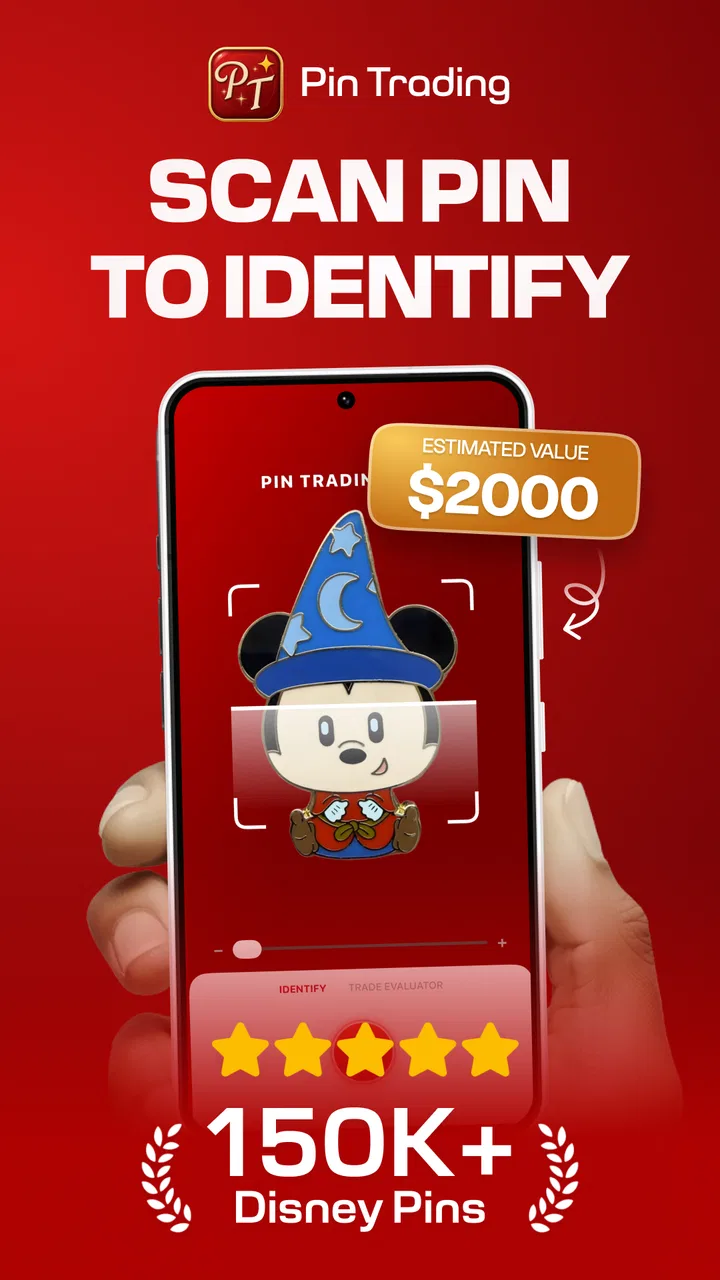
Pin Trading - Scan & Collect
- 4.5
- Rating
- 10.00K
- Installs
- Free
- Price

 Analysis by App-foxy
I approached Pin Trading - Scan & Collect as someone who wanted a tidier way to keep track of a pin collection, not as a replacement for the social side of trading. That distinction matters. Pin trading is partly about memories, conversations, and the thrill of finding an unusual design, while an app can help with the less exciting work: remembering what you own, noticing duplicates, and preparing for the next exchange. In my experience, this app makes the most sense when you already enjoy collecting and want a practical companion that stays focused on that hobby.
It is a free lifestyle app from Evergreen Apps LLC, with a 4.5 average from around 200 ratings and more than 10,000 installs. Those figures suggest a modest but active audience rather than a huge general-purpose platform. The Everyone age rating also fits the subject well: the idea is simple enough for families, casual collectors, and experienced traders alike. I would not expect it to teach the history of every pin or replace specialist collector communities, but it gives the hobby a more organized home on a phone.
How Pin Trading - Scan & Collect feels today
I look at the app’s present-day appeal through the small routines that make a collection dependable: recording new finds, checking entries against the actual pins, and deciding what is genuinely available to trade. That perspective matters even more when a phone is shared, because convenience should not blur who owns a favorite piece or who is making a trade decision. Next, I’d consider how a household can set simple boundaries before using a shared device.
You May Also Like

 AccuWeather: Weather Radar
AccuWeather Review: A Quick, Clear Forecast for Everyday Decisions
For everyday plans, the best forecast is the one you can understand quickly. AccuWeather makes rain timing, radar, and local conditions easy to act on, with a few trade-offs.

 Hill Climb Racing
Why Hill Climb Racing Still Turns Crashes Into One More Run
A tiny car, a bumpy hill and one more upgrade: Hill Climb Racing keeps resurfacing because its simple chaos makes every near-miss feel personal.

 AliExpress - Shopping App
AliExpress Makes Global Shopping Feel Personal, but Shoppers Bear the Risk
AliExpress turns a global marketplace into a pocket-sized discovery engine. Its reach is useful, its shopping loop compelling, and its trade-offs easy to miss.

 Lords Mobile: Kingdom Wars
Lords Mobile Is a Kingdom-Building Routine, Not a Quick Match
A case-by-case verdict on the building, battles, device demands, and social commitments that make Lords Mobile rewarding for some players and exhausting for others.

 PDF Scanner app - TapScanner
TapScanner Makes Paperwork Easier to Capture, Check, and Share
TapScanner makes scanning with a phone feel less like a rescue operation and more like a dependable step in getting work done. Its capture tools are useful, though not flawless.

 Block Blast!
 Shows How Much a Puzzle Game Can Leave Out
A quiet grid game shows why puzzle players increasingly value instant clarity, repeatable skill and low-pressure play—and where the genre still needs to catch up.
More From Our News Desk
View All News


A focused companion rather than a social network
The strongest part of the experience is its narrow purpose. Instead of trying to become a general marketplace, a messaging service, or a broad lifestyle dashboard, it is built around the basic rhythm of collecting: identify a pin, record it, review the collection, and use that information when deciding what to keep or trade. That focus makes the app easier to understand than tools that force a collector to build a complicated spreadsheet from scratch.
I especially like the idea of treating the phone as a quick reference during real-world trading. A collection often becomes difficult to remember once it grows beyond a small display board. A pin may be stored in a drawer, attached to a bag, packed for a trip, or temporarily set aside for a possible exchange. Having a dedicated record can reduce the awkward moment of trying to remember whether a design is already in the collection.
The app’s scan-and-collect approach also points toward a faster workflow than typing every entry manually. That is valuable when a collector is standing at an event, sorting several purchases at home, or helping a child document a growing set. The practical benefit is not simply speed. A quick capture process makes it more likely that the collection stays current, because the task feels manageable immediately after getting a new pin.
Why the current version matters
The current version is 1.1.9, which gives the app a little more maturity than an initial launch build. I see that as a useful sign for existing users: the product has moved beyond the very first version and is being maintained as a working companion. At the same time, a version number alone should not be treated as proof that every collector’s preferred workflow is covered. The important question is whether the app fits the way you personally sort, identify, and trade pins.
For a casual user, the current state is appealing because there is no need to commit to a paid download before trying the basic idea. The app costs nothing to install, while optional purchases range from about fifteen dollars to forty dollars per item. That makes the first decision straightforward, but it also means I would pay attention to which functions remain comfortable without spending anything. A free entry point is useful only if it lets you understand the everyday workflow before you decide whether extra purchases are worthwhile.
A realistic day with the app
Imagine coming home from a weekend outing with several new pins. I would first separate the pieces into three groups: definite keepers, possible trades, and items that still need closer inspection. The app can then serve as the first pass for recording them, rather than leaving everything in a bag until the collection becomes difficult to reconstruct. I would take the time to use consistent names and notes, because a rushed entry may be fast today but confusing several weeks later.
Before the next trading opportunity, I would review the collection and identify duplicates or designs I am comfortable offering. That preparation changes the conversation. Instead of saying, “I think I have something like that,” I can check what is actually recorded and make a more deliberate choice. For families, this could also prevent accidental trades of a favorite pin. For solo collectors, it provides a small but meaningful separation between sentimental pieces and items acquired mainly for exchange.
This is one of the app’s less obvious strengths: it can help turn collecting into a repeatable routine. The best result does not come from scanning everything once and forgetting about it. It comes from using the app at three points—when a pin arrives, when its status changes, and before a trading session. That habit is more useful than simply having a large digital list.
What has changed for people already using it
Users who started with an earlier build may appreciate the stability of a more developed version, but I would avoid assuming that an update automatically transforms the whole hobby. The verified release information establishes the current version, not a detailed catalogue of individual changes. In practical terms, existing users should judge the evolution by opening their own collection, checking whether their established records remain convenient to use, and seeing whether the current scanning flow fits new additions.
That is particularly important for collectors with a large backlog. A new app can feel excellent when adding the first handful of pins and much less comfortable when asked to absorb an entire collection at once. I would begin with the pins I actually trade or display most often, then expand gradually. This creates a useful working collection without turning setup into a weekend-long cataloguing project.
There is also a psychological benefit to that gradual approach. If every pin must be documented perfectly before the app becomes useful, the process can feel like homework. Recording the active part of the collection first gives immediate value and exposes any friction while the workload is still small. Only after that would I decide whether the app deserves a complete historical archive.
Where it fits beside ordinary alternatives
The usual alternative is a notes app, spreadsheet, photo folder, or paper checklist. Those options remain perfectly reasonable for a very small collection. A notes app is flexible, a spreadsheet can be highly detailed, and paper works without learning another interface. If you only own a few pins and rarely trade, Pin Trading - Scan & Collect may not save enough effort to justify changing your routine.
Its advantage appears when the collection becomes visual and active. A generic list may tell me that I own a pin, but a dedicated collecting workflow is better suited to browsing items, checking duplicates, and preparing a trade selection. A spreadsheet can go further with custom columns, yet it requires more design and maintenance. The app’s appeal is the middle ground: more purposeful than scattered notes, less demanding than building a personal database.
There is a trade-off here. A spreadsheet gives an advanced collector control over fields, formulas, sorting rules, and backup habits. A dedicated app gives a simpler starting point but may not match every unusual cataloguing system. I would choose the app for convenience and hobby-specific organization, while choosing a spreadsheet if I needed highly customized valuation records, complex historical tracking, or a collection shared across several people with strict editing rules.
Small workflows that make a big difference
My first practical tip is to decide on a naming style before entering many items. For example, I would use the same order for character, event, theme, or series whenever those details are relevant. Consistency makes later searching and browsing much easier than trying to remember how I described each pin on different days. This is a simple habit, but it prevents the collection from becoming a pile of slightly different labels.
My second tip is to separate ownership from intention. A pin can be part of the collection while still being available for trade, reserved for a friend, or temporarily undecided. I would not treat those situations as the same. Even if the app’s exact organization options do not match every personal system, thinking in these categories helps me avoid offering a sentimental item by mistake and makes pre-event preparation faster.
My third tip is to use the scan step as the beginning of verification, not the end. A quick capture can save time, but I would still check the entry against the physical pin before putting it away. Small differences in color, backing, edition, or design can matter to collectors. The app can organize what I record; it cannot replace my judgment about whether two similar-looking pieces are truly the same.
A fourth useful workflow is a “trade-ready” review before leaving home. I would look through the collection, pull out only the pins I am genuinely willing to exchange, and compare that physical group with the digital record. This two-step check is safer than relying on memory or assuming that every item marked as available is still in the same place. It also keeps the app from becoming a substitute for basic care of the actual collection.
Where the experience still has limits
The biggest limitation is that organization cannot create information that was never recorded. If I skip entries, use vague descriptions, or forget to update a trade, the collection view gradually becomes less trustworthy. That is not a flaw unique to this app, but it is especially important here because the value of a trading companion depends on accurate records.
I also would not choose it as my only tool if my main goal is discovering other collectors or negotiating exchanges online. The app’s identity is centered on scanning and collecting, so people looking for a busy social marketplace may be better served by a community platform designed around conversations and listings. Likewise, a specialist collector who needs extensive provenance, condition grading, purchase history, or detailed financial analysis may prefer a customizable database.
The optional purchase range is another point to consider. Because individual items can cost roughly fifteen to forty dollars, I would not buy anything until I had used the free experience long enough to identify a real limitation in my own workflow. A paid option should solve a problem I actually have, such as a collection size or organization need, rather than simply feeling like the expected next step. That approach keeps the app affordable and makes the decision more rational.
There is also a learning curve in any cataloguing system. The scan may feel wonderfully quick for new arrivals, but the first large import can still require patience. Collectors who dislike maintaining lists may abandon the process after the novelty fades. In that case, a small paper card kept with a trading pouch might be more reliable than a sophisticated digital record that is rarely updated.
Who should use it, and who should skip it
I would recommend it to someone who trades often enough to lose track of duplicates, travels with a collection, or wants a dedicated place for pins instead of mixing them into general notes and photos. It also looks useful for parents and children who want to make collecting more orderly without starting with a complicated spreadsheet. The free installation makes experimentation easy, and the Everyone rating keeps the audience broad.
I would be more cautious for a collector whose main pleasure comes from keeping everything offline and handwritten. There is no reason to digitize a hobby if the physical system already works well. I would also point advanced cataloguers toward a more flexible database if they need custom fields for every purchase, detailed condition reports, or a long-term archive with their own rules.
Collectors who expect automatic identification to settle every question should keep their expectations practical. Scanning can streamline entry, but responsible collecting still involves checking the physical item and deciding how much detail matters. The app is most useful as a companion to that judgment, not as an authority on authenticity, rarity, or value.
What I would watch as the app develops
For future progress, I would watch how well the app handles the transition from a small starter collection to a serious archive. The early experience needs to be quick, but long-term users also need confidence that older records remain easy to review and update. That balance—fast capture without losing useful detail—is the central test for a pin-trading companion.
I would also pay attention to how optional purchases affect the everyday free workflow. The best evolution would preserve a genuinely useful foundation while giving committed collectors clear reasons to upgrade. I would rather see improvements that reduce duplicate entry, make trade preparation clearer, and protect collection accuracy than features added only to make the app look busier.
Because the developer is Evergreen Apps LLC and the current build is 1.1.9, I see the product as an established work in progress rather than a finished replacement for every collecting tool. Its direction will become clearer through continued maintenance and through the way it handles real collections, not just first-time scans. Existing users should update with a backup mindset for anything they consider irreplaceable, while new users can start with a small, active subset and judge the workflow honestly.
My recommendation
After using it as a practical collecting aid, I see Pin Trading - Scan & Collect as a good fit for people who want less guesswork around ownership and trades. Its value is quiet rather than flashy: a quicker way to record new pieces, a clearer view of what is already owned, and a more prepared approach to the next exchange. Those benefits grow when the app becomes part of a routine instead of a one-time cataloguing project.
I would start free, record the pins I trade most often, and test the scan-and-review workflow over several real situations before considering an in-app purchase. If that process helps me avoid duplicates or accidental trades, the app is earning its place. If I rarely update it or need a highly customized archive, a spreadsheet or simpler notes system may remain the better choice.
Overall, I would recommend it to casual and committed pin traders who want a focused digital companion without immediately building their own database. It does not remove the personal decisions that make collecting enjoyable, and it should not be treated as a complete social or valuation platform. What it does offer is more useful than a generic list: a dedicated way to keep the physical hobby organized while leaving the excitement of finding and trading pins in my hands.
FAQs for Pin Trading - Scan & Collect
01What is Pin Trading - Scan & Collect, and how does it work?
Pin Trading - Scan & Collect is designed to help collectors organize and manage their pin collections in one place. You can record pins, add details such as names, locations, categories, or personal notes, and use scanning-related tools to identify or register items more quickly. It is especially useful for tracking what you own, what you still need, and which pins may be available for trading.
02Can I use the app to track pins I want to trade or exchange?
Yes, the app is useful for separating pins you own from those you are willing to trade. After adding an item, you can generally use collection information and notes to indicate its trading status, condition, or preferred exchange details. This makes it easier to prepare your collection before meeting other collectors, although the app should not be considered a complete marketplace unless that feature is specifically available in your version.
03Does Pin Trading - Scan & Collect require an internet connection?
Some functions may work without a constant internet connection, particularly viewing information that has already been saved on your device. However, features involving account synchronization, online databases, backups, updates, or sharing may require mobile data or Wi-Fi. If you plan to scan or add many pins while traveling, it is worth testing offline access beforehand and checking whether your collection synchronizes correctly afterward.
04Is the app suitable for beginners as well as experienced collectors?
Pin Trading - Scan & Collect can be useful for both new and experienced collectors. Beginners can use it as a simple digital inventory instead of relying on spreadsheets or handwritten lists, while experienced traders may appreciate having more detailed records for larger collections. The overall benefit depends on how carefully you enter information, since incomplete names, categories, photos, or condition notes can make future searches less reliable.
05What should I know about privacy and collection data before downloading it?
Before using the app extensively, review its permissions and privacy information in the Google Play Store or App Store. Collection records, photographs, account details, and synchronization data may be stored locally or processed through online services, depending on the app’s current design. Avoid entering sensitive personal information, and consider creating a backup or exporting your collection if the application provides that option.
Pros
- Quickly scans and identifies collectible pins using the phone camera.
- Helps organize a growing pin collection in one searchable catalog.
- Useful for tracking duplicates and finding missing items in a collection.
- Clean interface makes adding and reviewing pins straightforward.
- Portable collection records are convenient when trading at events or parks.
Cons
- Recognition may be inaccurate with damaged
- rare
- or poorly lit pins.
- Some features may require a subscription or in-app purchases.
- The app depends on an internet connection for certain scans or data.
- Pin details may be incomplete or vary depending on the community database.
- Frequent scanning can use noticeable battery and camera resources.

Pin Trading - Scan & Collect
Gallery